
Introduction
Bispecific antibodies (BsAbs) targeting B-cell maturation antigen (BCMA) for the treatment of patients with relapsed or refractory multiple myeloma (RRMM) are currently administered to patients as a continuous therapy until disease progression or unacceptable toxicity.1–3 Although the optimal long-term dosing schedule remains unknown, a less frequent dosing schedule may improve response duration and long-term safety by mitigating T-cell exhaustion and chronic immune activation, potentially preserving T-cell function. It is known that B cell recovery takes many months to years after CAR-T therapy, and while little is known about B-cell recovery following T-cell engager therapy, reduced dosing frequency has the potential to improve plasma cell recovery. Taken together, reduced dosing frequency could positively impact the function of T and B cells, and also reduce cumulative toxicity and infection risk.4,5
Elranatamab, a humanized BCMA-CD3 BsAb, has shown deep and durable responses and a manageable safety profile in patients with RRMM who have triple-class exposed disease.1,2,6 The phase 2 registrational MagnetisMM-3 trial (NCT04649359) comprised 2 cohorts: cohort A patients were naive to BCMA-directed treatment and cohort B patients had received prior BCMA treatment (antibody-drug conjugate or chimeric antigen receptor T-cell therapy). After 28.4 months of follow-up, BCMA-naive patients treated with elranatamab demonstrated promising progression-free survival (PFS; median 17.2 months), and no new safety signals were observed.6
In MagnetisMM-3, patients could transition from weekly (QW) elranatamab dosing to once every 2 weeks (Q2W), and then to a once-every-4-weeks (Q4W) schedule.2 Among patients who switched to a Q2W dosing schedule, treatment response ≥6 months after the switch was maintained or improved in 80.0% of patients, and the incidence of grade 3 or 4 adverse events (AEs) decreased with Q2W dosing. Because less frequent dosing may further improve the safety profile of elranatamab, we report here the clinical outcomes for a subgroup of patients who switched from Q2W to Q4W dosing.
Materials and Methods
The study design, eligibility criteria and full details on elranatamab treatment for patients in the MagnetisMM-3 study (NCT04649359) have been previously described in detail.2,6
Treatment
Briefly, patients received 2 step-up doses of subcutaneous elranatamab (12 mg on Day [D]1 and 32 mg on D4), followed by the full treatment dose of 76 mg QW starting on D8 (28-day cycles). Patients who received ≥6 QW cycles and achieved a partial response or better per International Myeloma Working Group [IMWG] criteria7 that persisted for ≥2 months were eligible to transition to Q2W dosing, and further to Q4W dosing after ≥6 cycles of Q2W dosing, maintaining a 76-mg dose throughout.
Efficacy and safety assessments
The primary and secondary endpoints in MagnetisMM-3 have been described previously.2 Outcomes in patients who switched to a Q4W dosing schedule were assessed in a post hoc analysis. The impact of switching to Q4W on efficacy was assessed by evaluating the maintenance of response ≥6 months after the switch to Q4W dosing. For this analysis, responders were defined as patients who had an assessment demonstrating response ≥6 months after the switch.
The impact of switching from Q2W to Q4W dosing on safety was assessed by comparing the incidence of new onset AEs for each patient in an equal time period (a maximum of 6 months) before and after the switch. The time period was based on individual patient follow-up time after the switch. AEs were graded using the National Cancer Institute Common Terminology Criteria for AEs (version 5.0).
Statistical analyses
Efficacy and safety were evaluated in all BCMA-naive patients enrolled in MagnetisMM-3 who received at least one dose of elranatamab. Descriptive statistics were used for efficacy and safety outcomes unless otherwise stated. Exact two-sided 95% confidence intervals (CIs) were included for response endpoints. Time-to-event endpoints were summarized using the Kaplan-Meier method. Medians, rates, and their two-sided 95% CIs were included. The CIs for the median were calculated according to Brookmeyer and Crowley, and the CIs for the survival function estimates at specific time points were derived using the log(−log) method. The data cutoff for this analysis was September 8, 2025 (approximately 44 months after last patient’s first dose), with a median (range) follow-up of 45.8 (0.2-49.9) months, estimated by reverse Kaplan-Meier.
Results
Patients
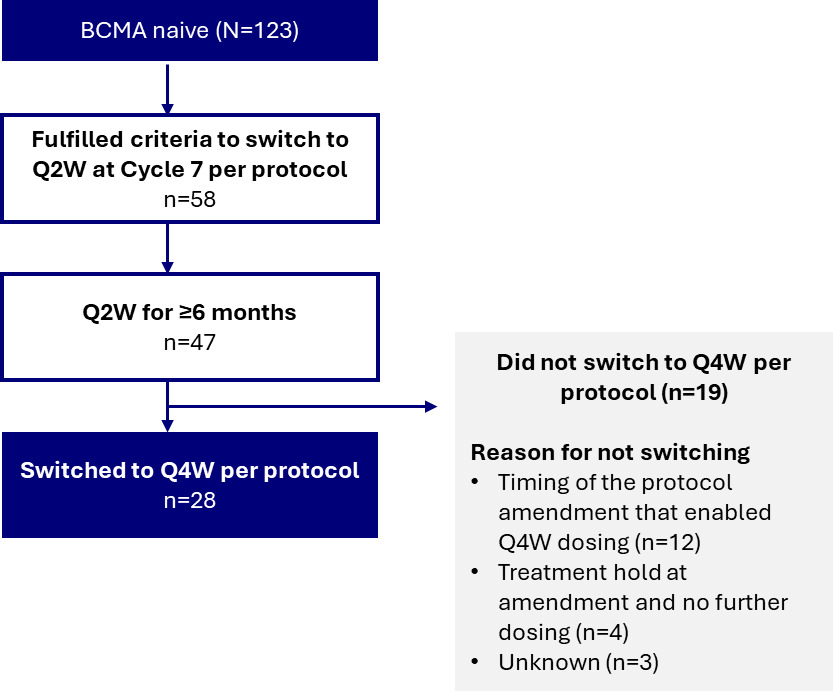
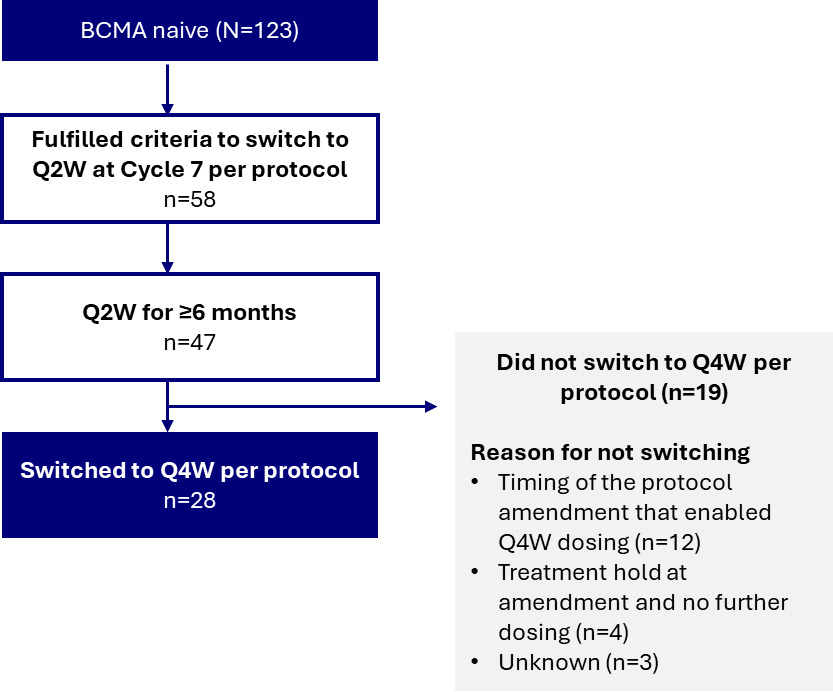
Among the 123 BCMA-naive patients who received elranatamab, 64 did not have progressive disease (by blinded independent central review [BICR]) and were still on treatment at the start of Cycle 7 (Figure 1). Of these, 58 met the criteria to transition from QW to Q2W dosing. The median duration of Q2W dosing was 13.4 months (range, 0.03-25.9). Of the 47 patients who completed ≥6 cycles of Q2W dosing, 28 switched to Q4W. The median duration of the latter was 18.7 months (range, 1.9-26.3). Among the remaining 19 patients who did not transition to Q4W dosing, the reasons for not switching were the timing of the protocol amendment that enabled Q4W dosing (n=12), a treatment hold and no further dosing after protocol amendment (n=4), or unknown (n=3). At the data cutoff, 16 patients in the overall BCMA-naive cohort (N=123) were still receiving treatment.
Efficacy
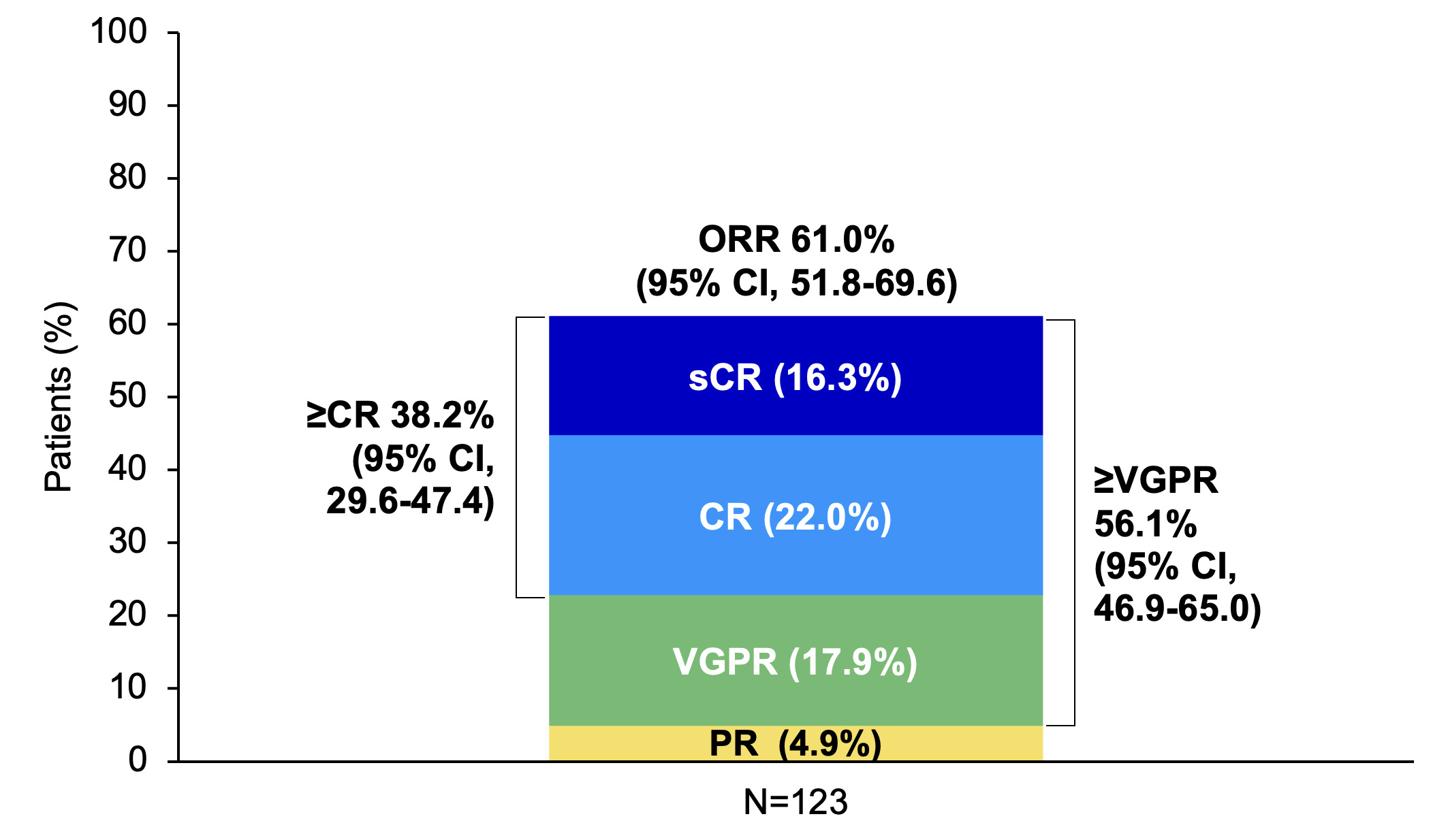
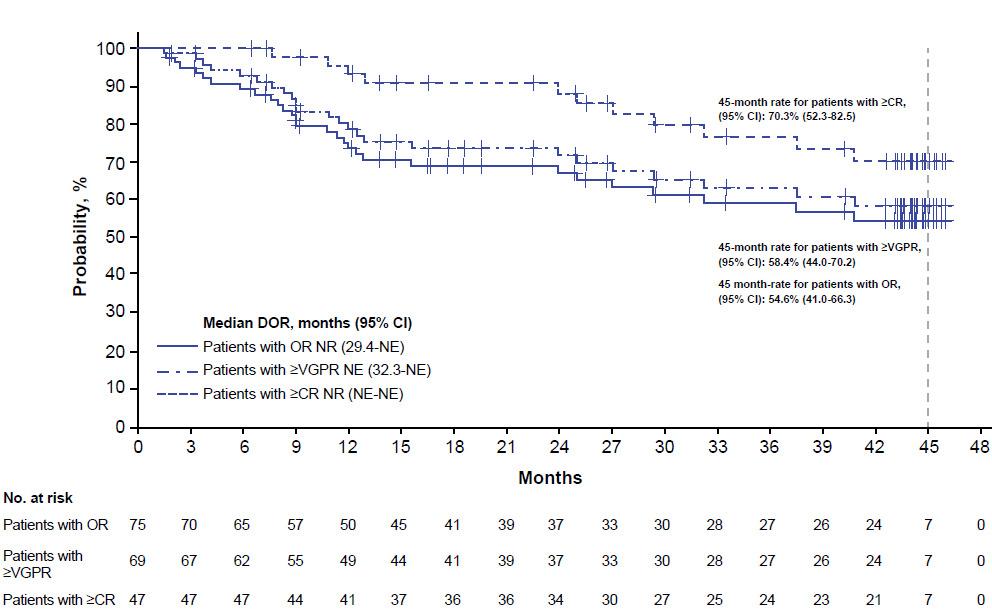
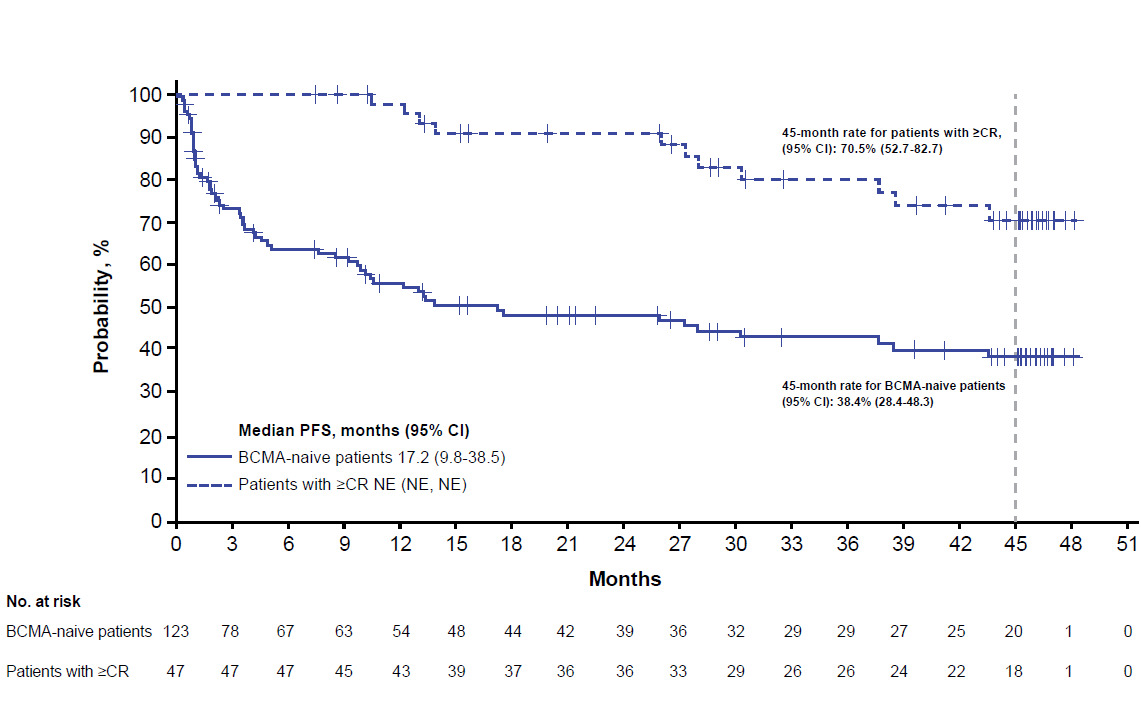
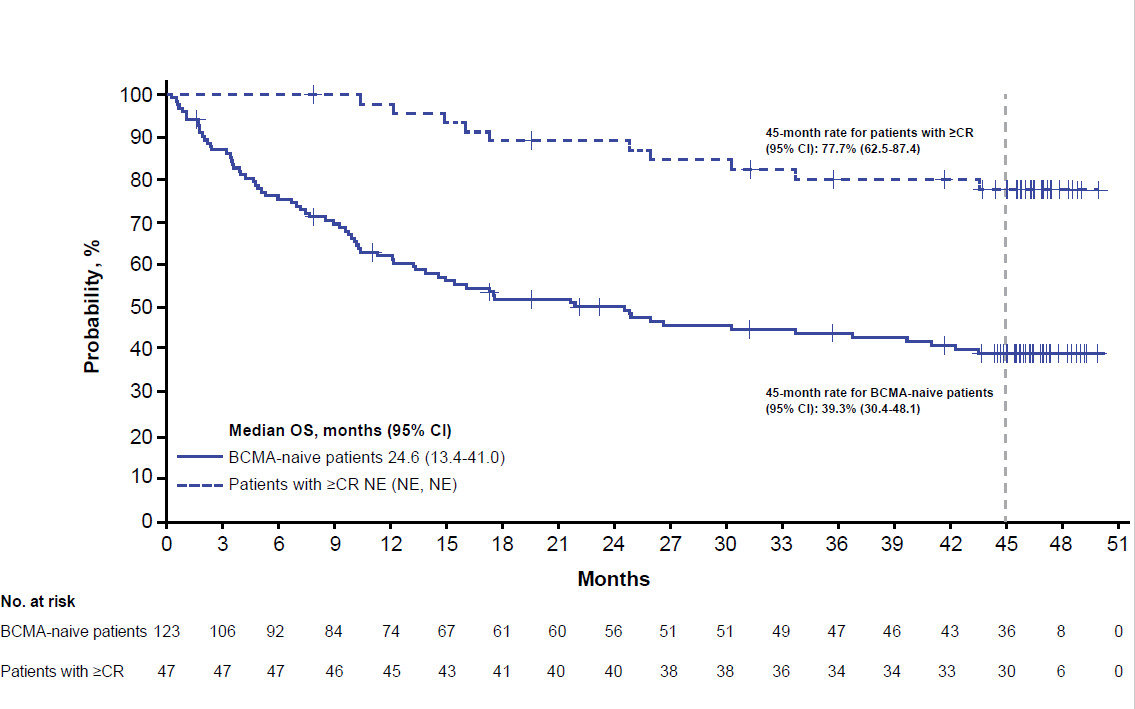
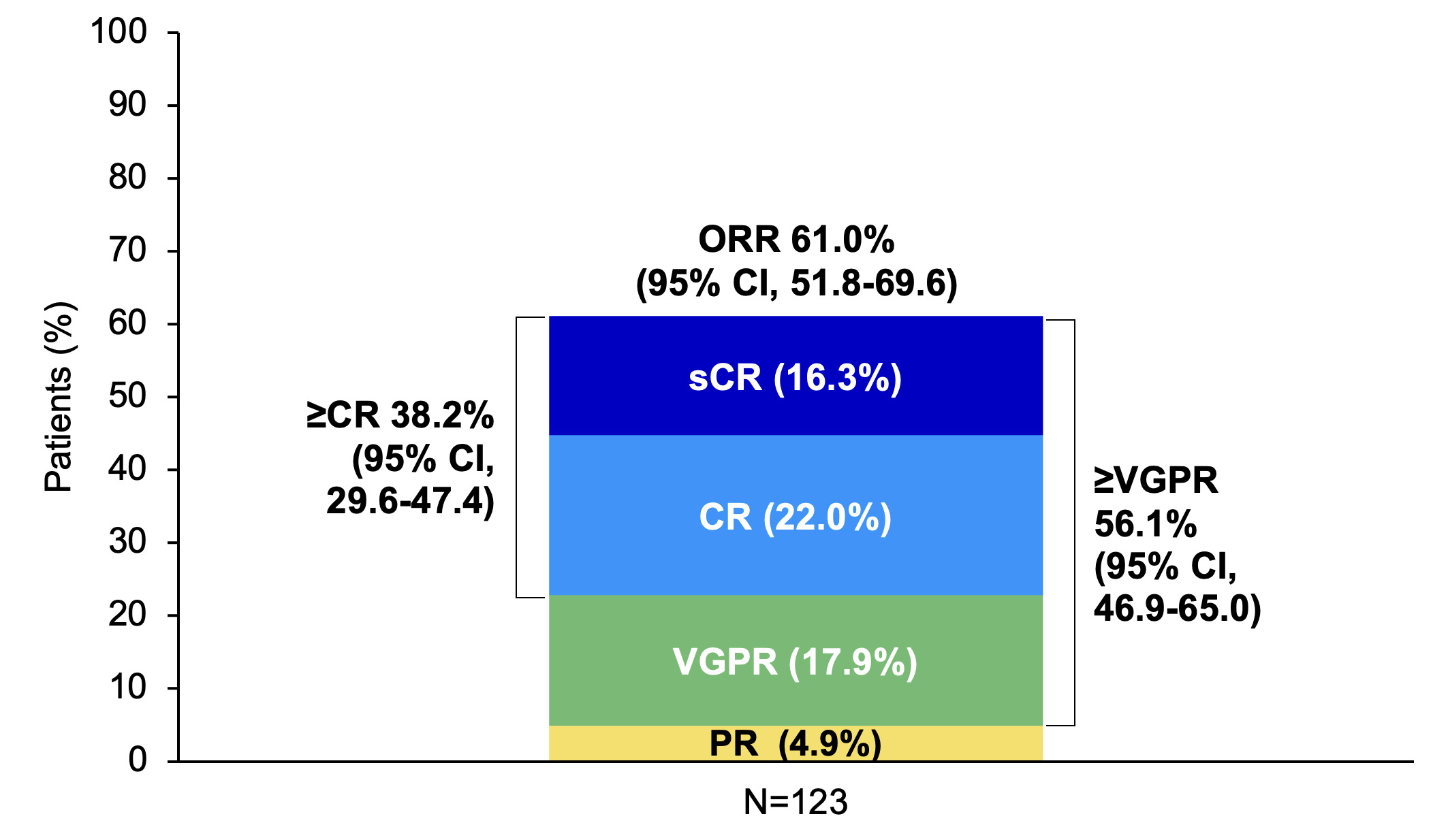
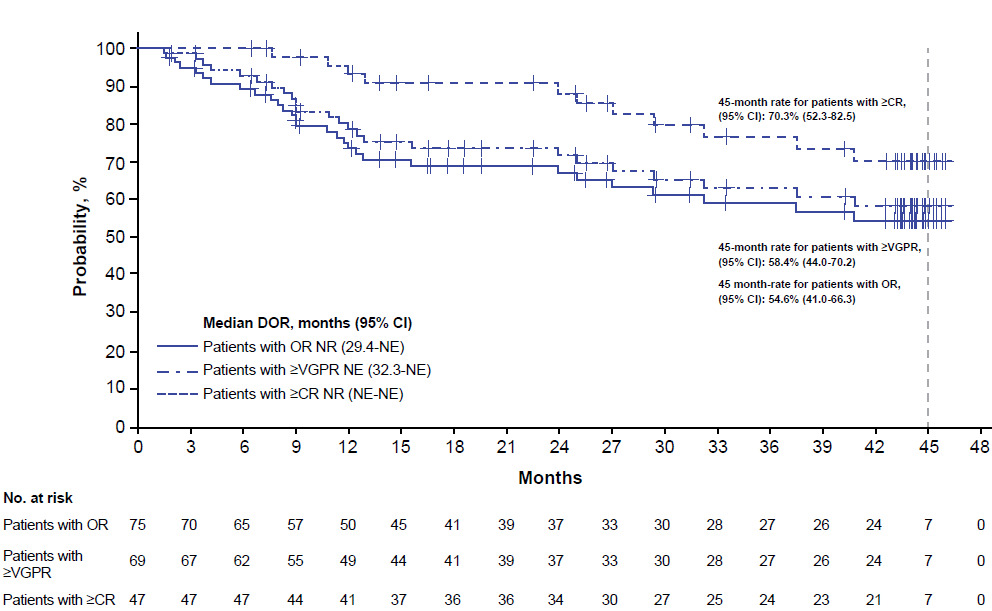
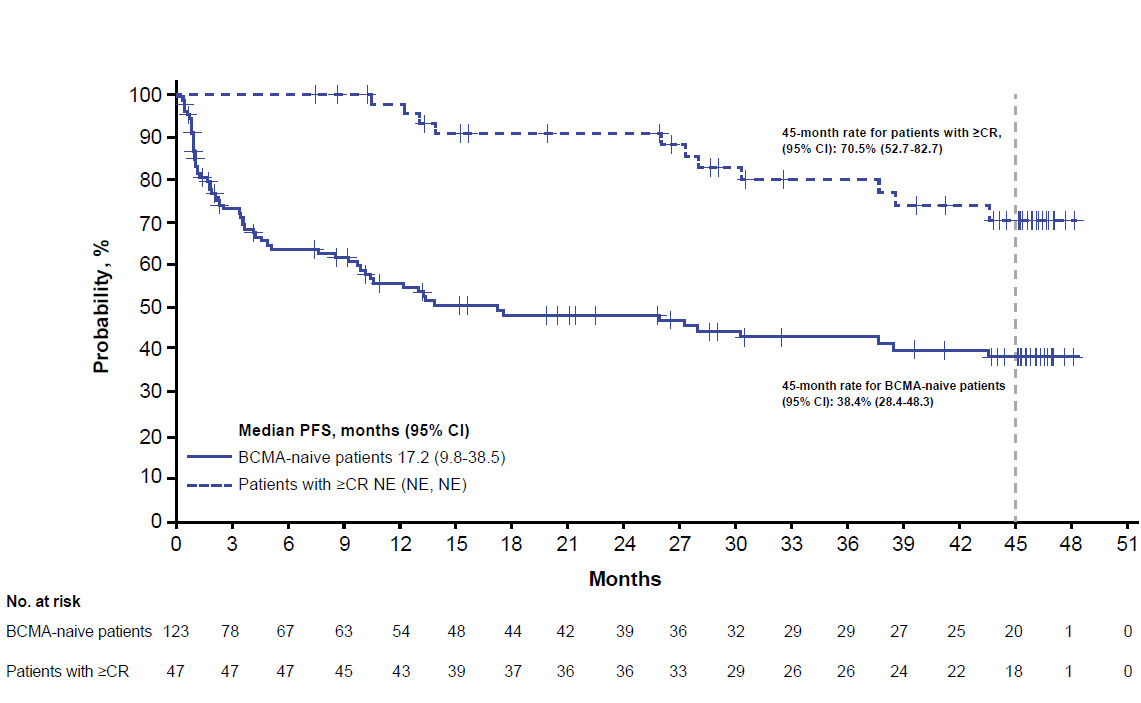
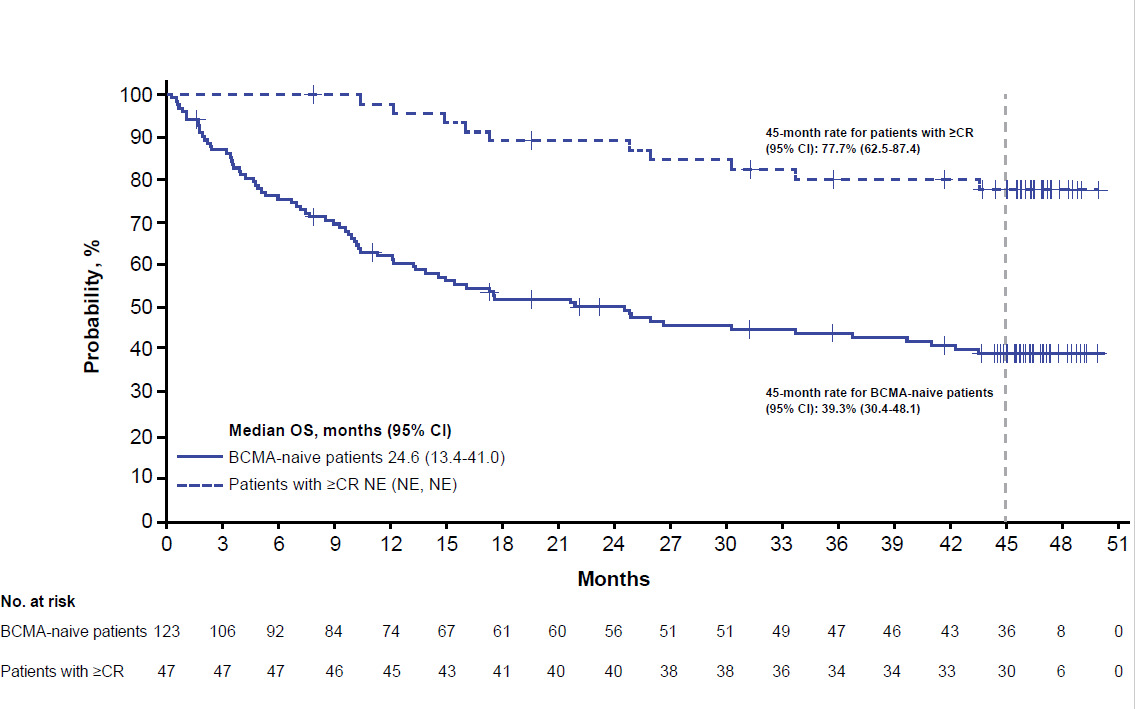
The objective response rate (ORR) by BICR in the overall BCMA-naive population (N=123) was 61.0%, with 38.2% of patients achieving a complete response or better (≥CR) (Figure 2). In patients with a ≥CR who were evaluable post-baseline for minimal residual disease (MRD; n=31), the MRD negativity (10-5) rate was 90.3%. The median duration of response (DOR) was not yet reached (95% CI: 29.4-not evaluable) (Figure 3), with 21% of responders censored and no longer being followed up for progression. For patients with an objective response or ≥CR, the probability of maintaining a response at 45 months was 54.6% (95% CI: 41.0-66.3) and 70.3% (95% CI: 52.3-82.5), respectively. In the overall BCMA-naive population, median PFS was 17.2 months (95% CI: 9.8-38.5) (Figure 4) and median overall survival (OS) was 24.6 months (95% CI: 13.4-41.0) (Figure 5). For patients with ≥CR, the PFS and OS rates at 45 months were 70.5% (95% CI: 52.7-82.7) and 77.7% (95% CI: 62.5-87.4), respectively. With approximately 18 additional months of follow-up since the last report,6,8 there were 7 new off-treatment deaths (2 patients due to disease under study, 1 patient other [pneumonia], and 4 patients due to unknown reasons) and 1 new death within 90 days of last dose due to study treatment toxicity (progressive multifocal leukoencephalopathy).
Among responders who switched to Q4W dosing ≥6 months before the data cutoff (n=28), 26 (92.9%) maintained or improved their response ≥6 months after the switch, including 23 (88.5%) who maintained ≥CR and 1 (3.8%) who improved to CR. One (3.6%) patient had progressive disease (per IMWG criteria in ≥1 assessment), and 1 (3.6%) permanently discontinued elranatamab and initiated a new anticancer therapy within 6 months after the switch to Q4W dosing and had no further efficacy assessments. At the data cutoff, 16 (57.1%) patients remained on treatment and 12 (42.9%) discontinued treatment: 6 (21.4%) due to an adverse event, 4 (14.3%) due to progressive disease, 1 (3.6%) refused further treatment, and 1 (3.6%) refused further study procedures.
Safety
In the overall safety population (N=123), hematologic AEs (any grade, maximum grade 3/4) that occurred in ≥25% of patients included neutropenia (49.6%, 49.6%), anemia (49.6%, 38.2%), thrombocytopenia (32.5%, 23.6%), and lymphopenia (26.8%, 25.2%; Table 1). AEs of interest included infections (any grade, 70.7%; grade 3/4, 42.3%; grade 5, 7.3%), cytokine release syndrome (57.7%; all grade ≤2), and immune effector cell–associated neurotoxicity (4.9%; all grade ≤2).
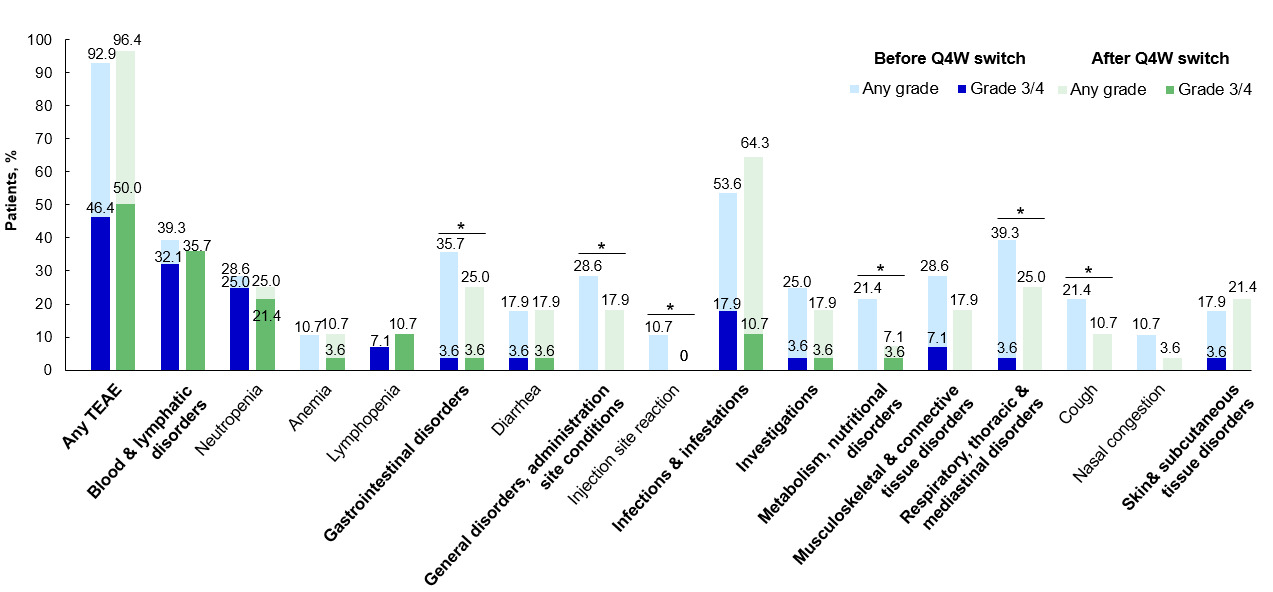
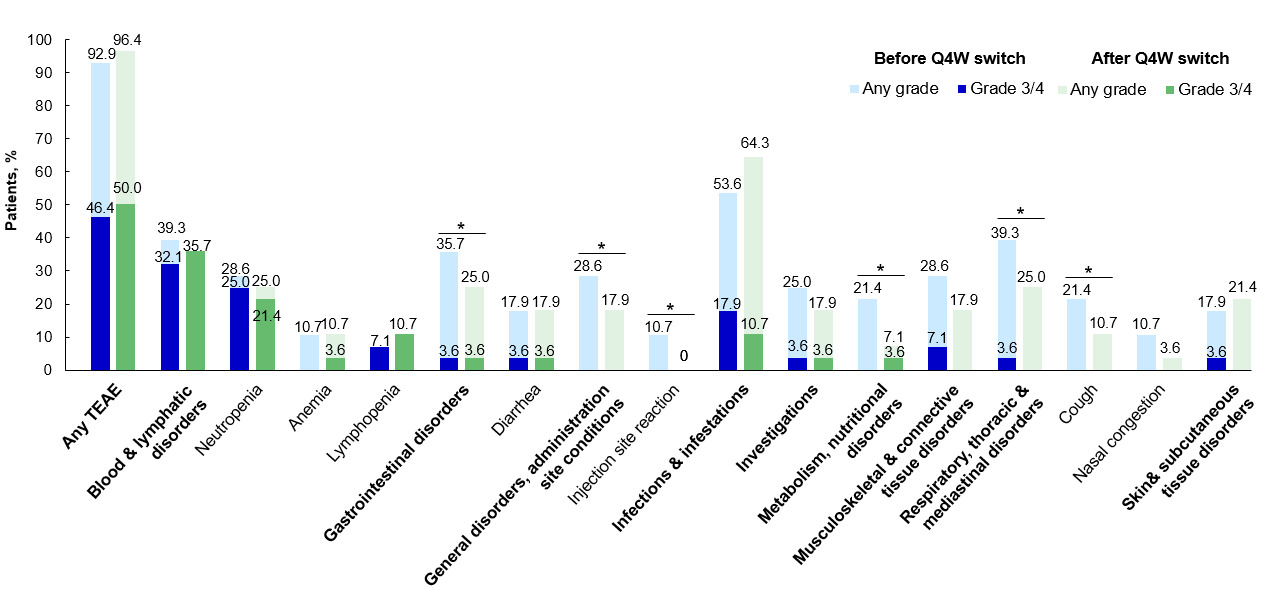
Any-grade TEAEs by system organ class with a ≥10% reduction in incidence (comparing equal time windows [up to 6 months] for each patient before versus after switching from Q2W to Q4W dosing) included gastrointestinal disorders (35.7% to 25.0%); general disorders (28.6% to 17.9%; metabolism and nutrition disorders (21.4% to 7.1%); musculoskeletal and connective tissue disorders (28.6% to 17.9%); and respiratory, thoracic and mediastinal disorders (39.3% to 25.0%) (Figure 6). TEAEs by preferred term reported in ≥10% of patients in equal time windows (up to 6 months) before or after switching from Q2W to Q4W are also shown in Figure 6; among them, ≥10% reduction from before to after switching was observed for any-grade injection site reaction (10.7% to 0%) and cough (21.4% to 10.7%). After the switch from Q2W to Q4W dosing, the rate of grade 3/4 infections decreased from 17.9% to 10.7%.
Discussion
These results from MagnetisMM-3 demonstrate that transition to less frequent Q4W elranatamab dosing did not compromise efficacy in heavily pretreated BCMA-naive patients with triple-class refractory RRMM, with 92.9% of patients maintaining or improving their response ≥6 months after the switch, and many (92.3%) maintaining or improving to ≥CR. Furthermore, the high rate of MRD negativity (90.3%) among evaluable patients reinforces the potential of elranatamab to achieve deep responses in this challenging population.9,10 The incidence of select TEAEs by system organ class, including gastrointestinal, metabolism and nutrition, and respiratory disorders, declined by ≥10%. Grade 3/4 infections decreased from 17.9% to 10.7% after the switch, suggesting improved tolerability of elranatamab with less frequent dosing. The US Food and Drug Administration has recently approved a Q4W dosing regimen11 after considering the longer-term efficacy and safety of elranatamab and the continued clinical benefit with reduced elranatamab dosing frequency for responding patients. This addition to the US prescribing label offers patients convenience and reduced overall treatment cost with no change to the benefit/risk profile of elranatamab. Nonetheless, despite switching to Q4W dosing, the rate of infections and infestations of any grade was still 64.3%, highlighting that infection risk persists despite reductions in grade 3/4 events and that ongoing careful monitoring and early intervention for infection are required. Moreover, further studies on dose modifications after very long exposures to elranatamab are warranted. MagnetisMM-9 (NCT05014412) is a prospective clinical study evaluating a higher dose of elranatamab with earlier transitions to less frequent dosing.12
Among all BCMA-naive patients in MagnetisMM-3, the ORR was maintained with additional follow-up since the last report, including a ≥CR rate of 38.2%.6 Likewise, the median DOR has still not been reached, highlighting the durable efficacy of elranatamab. Despite a heavily pretreated patient population, many of whom had triple-class refractory disease (96.7%), the median PFS and OS of 17.2 and 24.6 months, respectively, as previously reported,6 are encouraging and consistent with other approved BCMA-directed BsAbs.13 These long-term follow-up results underscore the promising role of elranatamab as a safe, effective, and durable treatment option for patients with RRMM.
This analysis has several limitations. The single-arm design of MagnetisMM-3 limits direct comparisons with other BCMA-directed BsAb therapies. In addition, the findings are based on a post-hoc analysis with a limited sample size (n=28) and therefore should be interpreted as hypothesis-generating. Importantly, patients who transitioned to Q4W dosing represent a select population enriched for individuals with sustained response and treatment tolerance through both the initial QW and subsequent Q2W treatment phases. This may have introduced selection bias, where patients with early progression, toxicity, or inadequate response were excluded. As a result, the favorable outcomes observed after switching to Q2W and then to Q4W dosing may in part reflect the inherently better prognosis of these patients, rather than the effect of reduced dosing frequency alone. However, the long-term safety and efficacy seen here align with emerging data on other BCMA-directed BsAbs, including evaluations of extended dosing intervals, adding to the growing evidence that less frequent dosing strikes a balance between durable clinical responses and cumulative toxicity.4,14
In conclusion, these extended follow-up results from the ongoing MagnetisMM-3 trial demonstrate that elranatamab continues to provide sustained clinical efficacy and a manageable safety profile in heavily pretreated, BCMA-naive patients with RRMM, including those who transition to a less frequent dosing schedule. Reducing the dosing frequency of elranatamab may improve long-term safety without compromising efficacy, provide greater convenience for patients, and lower treatment costs for payers.
Acknowledgments
We thank the patients who participated in the MagnetisMM-3 trial and medical staff of the participating centers. Medical writing support was provided by Robyn Roth, PhD, of Nucleus Global and was funded by Pfizer.
Author contributions
All the authors were involved in trial design, or the acquisition, analysis, or interpretation of the data. All authors contributed to the drafting, reviewing, and editing of the article, and approved the final version for submission.
Conceptualization: H. Miles Prince (Equal), Emma Searle (Equal), Nizar J. Bahlis (Equal), Paula Rodriguez-Otero (Equal), Lionel Karlin (Equal), Luke Akard (Equal), Asya Varshavsky Yanovsky (Equal), Michael P. Chu (Equal), Yuya Nagai (Equal), David H. Vesole (Equal), Sharon T. Sullivan (Equal), Eric Leip (Equal), Alexander Neuhof (Equal), Alexander M. Lesokhin (Equal). Data curation: H. Miles Prince (Equal), Emma Searle (Equal), Nizar J. Bahlis (Equal), Paula Rodriguez-Otero (Equal), Lionel Karlin (Equal), Luke Akard (Equal), Asya Varshavsky Yanovsky (Equal), Michael P. Chu (Equal), Yuya Nagai (Equal), David H. Vesole (Equal), Sharon T. Sullivan (Equal), Eric Leip (Equal), Alexander Neuhof (Equal), Alexander M. Lesokhin (Equal). Formal Analysis: H. Miles Prince (Equal), Emma Searle (Equal), Nizar J. Bahlis (Equal), Paula Rodriguez-Otero (Equal), Lionel Karlin (Equal), Luke Akard (Equal), Asya Varshavsky Yanovsky (Equal), Michael P. Chu (Equal), Yuya Nagai (Equal), David H. Vesole (Equal), Sharon T. Sullivan (Equal), Eric Leip (Equal), Alexander Neuhof (Equal), Alexander M. Lesokhin (Equal). Writing – original draft: H. Miles Prince (Equal), Emma Searle (Equal), Nizar J. Bahlis (Equal), Paula Rodriguez-Otero (Equal), Lionel Karlin (Equal), Luke Akard (Equal), Asya Varshavsky Yanovsky (Equal), Michael P. Chu (Equal), Yuya Nagai (Equal), David H. Vesole (Equal), Sharon T. Sullivan (Equal), Eric Leip (Equal), Alexander Neuhof (Equal), Alexander M. Lesokhin (Equal). Writing – review & editing: H. Miles Prince (Equal), Emma Searle (Equal), Nizar J. Bahlis (Equal), Paula Rodriguez-Otero (Equal), Lionel Karlin (Equal), Luke Akard (Equal), Asya Varshavsky Yanovsky (Equal), Michael P. Chu (Equal), Yuya Nagai (Equal), David H. Vesole (Equal), Sharon T. Sullivan (Equal), Eric Leip (Equal), Alexander Neuhof (Equal), Alexander M. Lesokhin (Equal).
Source of funding
This study was funded by Pfizer.
Ethics approval statement
This study was conducted in accordance with the International Council for Harmonisation guidelines for Good Clinical Practice and the principles of the Declaration of Helsinki. The study protocol was approved by local or independent institutional review boards or ethics committees at participating sites.
Patient consent statement
All patients provided written informed consent.
Clinical trial registration
Information on the MagnetisMM-3 study (NCT04649359) can be found at www.clinicialtrials.gov.
Competing interests
H. Miles Prince: Research funding: AbbVie. Honoraria: Amgen, Bristol Myers Squibb, GSK, Johnson & Johnson, Kyowa Kirin, Mallinckrodt, and Takeda. Emma Searle: Consultancy and honoraria: Sanofi, BMS, Johnson & Johnson, Syndax, Pfizer, BeOne Medicines, Menarini Stemline, GlaxoSmithKline, Jazz, Astellas, and Servier. Travel and accommodations expenses: Johnson & Johnson, AbbVie, BeOne Medicines, and Menarini Stemline. Nizar J. Bahlis: Consultancy: AbbVie, Amgen, Bristol Myers Squibb, F. Hoffmann-La Roche Ltd, GSK, Janssen, Karyopharm, Kite, Pfizer, and Sanofi. Research funding: Janssen and Pfizer. Honoraria and membership on an entity’s Board of Directors or advisory committees: AbbVie, Amgen, Bristol Myers Squibb, F. Hoffmann-La Roche Ltd, GSK, Janssen, Karyopharm, Pfizer, Sanofi, and Takeda. Paula Rodríguez Otero: Consultancy: AbbVie, Bristol Myers Squibb, Janssen, Johnson & Johnson, and Roche. Honoraria and membership on an entity’s Board of Directors or advisory committees: AbbVie, Amgen, GSK, Janssen, Johnson & Johnson, Oncopeptides, Regeneron, and Sanofi. Lionel Karlin: Honoraria: AbbVie, Amgen, Celgene, Janssen, Sanofi, and Takeda. Honoraria and membership on an entity’s Board of Directors or advisory committees: Amgen, Celgene, GSK, Janssen, and Takeda. Luke Akard: Honoraria and payment for advisory boards and logistical and financial assistance for conference attendance: AbbVie, Amgen, Bristol Myers Squibb-Celgene, GSK, Janssen, Pfizer, Sanofi, Stemline Therapeutics, and Takeda. Asya Varshavsky-Yanovsky: Consultancy: Bristol Myers Squibb, Janssen, and Pfizer. Membership on an entity’s Board of Directors or advisory committees: Janssen. Michael Chu: Consultancy: Amgen. Honoraria: Amgen, AstraZeneca, Bristol Myers Squibb, Janssen, Kite/Gilead, Pfizer, and Sanofi. David H. Vesole: Speakers bureau: Amgen, Bristol Myers Squibb, Janssen, Karyopharm, Sanofi, and Takeda. Anne Hickman, Sharon T. Sullivan, Eric Leip, and Andrea Viqueira report employment and stock ownership at Pfizer. Umberto Conte: Current employment and current holder of stock options in a privately held company: Pfizer. Honoraria: Bristol Myers Squibb, Janssen, Ono, Sanofi, and Takeda. Research funding: Bristol Myers Squibb, Janssen, Pfizer, and Takeda. Other intellectual property, grants and contracts and patents & royalties: Alexion, Bristol Myers Squibb, Janssen, Pfizer, and Takeda. Alexander M. Lesokhin: Consultancy and honoraria: Arcellx, F. Hoffmann-La Roche Ltd, Janssen, Pfizer, and SVB Leerink. Research funding: Pfizer. Patents and royalties: Serametrix, Inc. Yuya Nagai: No conflicts of interest to disclose.
Data availability
Upon request, and subject to review, Pfizer will provide the data that support the findings of this study. Subject to certain criteria, conditions, and exceptions, Pfizer may also provide access to the related individual de-identified patient data. See https://www.pfizer.com/science/clinical-trials/trial-data-and-results for more information.